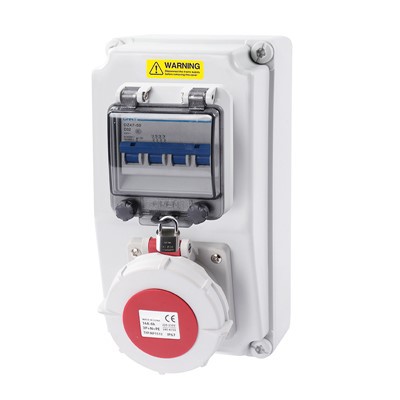

Hey there, folks! As a supplier of commercial distribution boxes, I've seen my fair share of issues that can pop up with these crucial pieces of equipment. Today, I'm gonna share some tips on how to troubleshoot a commercial distribution box. Whether you're an electrician, a facility manager, or just someone dealing with a bit of electrical trouble, these steps can help you get to the bottom of things.
1. Safety First
Before you even think about opening up that distribution box, safety should be your top priority. Make sure you're wearing the right personal protective equipment (PPE), like insulated gloves and safety glasses. Turn off the power supply to the distribution box at the main circuit breaker. It might seem like a hassle, but trust me, it's better than getting zapped. You don't want to end up in the hospital because you were too lazy to take a few extra seconds to be safe.
2. Visual Inspection
Once the power is off, it's time to take a good look inside the box. Check for any obvious signs of damage, like burnt wires, melted insulation, or loose connections. Sometimes, a simple visual inspection can reveal the root cause of the problem. Look for signs of overheating, such as discoloration on the wires or components. If you see any blackened areas, that's a clear indication that something's not right.
Also, check the condition of the circuit breakers. Are they in the "on" position when they should be? Do any of them look tripped? A tripped breaker can be a sign of an overload or a short circuit. If you find a tripped breaker, don't just reset it right away. You need to figure out why it tripped in the first place.
3. Check for Loose Connections
Loose connections are one of the most common causes of problems in a commercial distribution box. Over time, vibrations and temperature changes can cause the screws and terminals to loosen. Use a screwdriver to gently tighten any loose connections you find. But be careful not to overtighten, as that can damage the wires or terminals.


While you're at it, check the bus bars. These are the metal bars that distribute power to the different circuits in the box. Make sure they're clean and free of corrosion. Corroded bus bars can cause poor conductivity and lead to overheating.
4. Test the Circuits
If you've ruled out any obvious visual problems and loose connections, it's time to start testing the circuits. You'll need a multimeter for this. Set the multimeter to the appropriate voltage range and test each circuit in the distribution box. Start by testing the incoming power supply to make sure it's within the correct voltage range.
Next, test each individual circuit. If a circuit isn't getting power, there could be a problem with the breaker, the wiring, or a downstream device. You can also use the multimeter to check for continuity in the wires. If there's no continuity, it means there's a break in the wire somewhere.
5. Check for Overloads
Overloading a circuit is another common problem in commercial distribution boxes. If too many devices are connected to a single circuit, it can cause the breaker to trip. To check for overloads, look at the rating of each circuit breaker and compare it to the load on the circuit. You can usually find the breaker rating on the handle or the label.
If you find that a circuit is overloaded, you have a few options. You can either reduce the load on the circuit by unplugging some devices or redistributing them to other circuits. Or, you can upgrade the circuit breaker to a higher rating if it's safe to do so. But remember, you should always consult a qualified electrician before making any changes to the electrical system.
6. Look for Short Circuits
A short circuit occurs when a live wire comes into contact with a neutral wire or a ground wire. This can cause a massive surge of current and trip the breaker. To check for short circuits, you can use a multimeter to measure the resistance between the live wire and the neutral or ground wire. If the resistance is very low or zero, it's a sign of a short circuit.
Finding the exact location of a short circuit can be tricky. You may need to use a tracing tool or consult a professional electrician. In some cases, the short circuit could be caused by a faulty device downstream of the distribution box. So, it's a good idea to check all the connected devices as well.
7. Check the Grounding
Proper grounding is essential for the safety and proper functioning of a commercial distribution box. A faulty grounding system can cause electrical shocks, equipment damage, and even fires. Check the grounding connections in the box to make sure they're secure and free of corrosion.
You can use a grounding tester to check the resistance of the grounding system. If the resistance is too high, it could indicate a problem with the grounding electrode or the wiring. If you suspect a grounding issue, it's best to call in a professional electrician to take a look.
8. Consider the Environment
The environment in which the distribution box is located can also affect its performance. If the box is exposed to moisture, dust, or extreme temperatures, it can cause problems over time. Check for any signs of water damage, such as rust or mold. If the box is in a damp area, you may need to install a dehumidifier or relocate the box to a drier location.
Similarly, if the box is in a dusty environment, make sure it's properly sealed to prevent dust from getting inside. Dust can accumulate on the components and cause them to overheat or malfunction.
Where to Get a Reliable Commercial Distribution Box
If you're in the market for a new commercial distribution box or need replacement parts, check out our Commercial Electrical Distribution Box. We offer a wide range of high-quality distribution boxes that are designed to meet the needs of various commercial applications.
If you have any questions or need help with troubleshooting your existing distribution box, don't hesitate to reach out. Our team of experts is here to assist you. Whether you're a small business owner or managing a large commercial facility, we can provide you with the solutions you need. Contact us to discuss your requirements and explore the best options for your electrical distribution needs.
References
- National Electrical Code (NEC)
- Electrical Installation Manuals
- Manufacturer's Documentation for Commercial Distribution Boxes