Power Distribution Boxes Segmented by Enclosure Material
The mechanical, chemical, and electrical performance of a temporary or fixed power distribution box depends strictly on its enclosure material. Selecting the correct material ensures compliance with site safety standards, prevents thermal de-rating, and mitigates structural failure modes. We engineer and manufacture four distinct configurations designed for specific industrial environments, impact profiles, and chemical exposures.
-
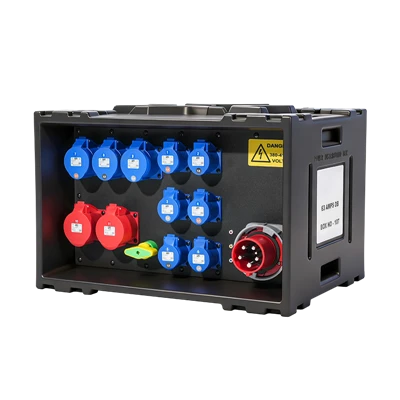
![HDPE Power Distribution Cabinet]() HDPE Power Distribution CabinetThe HDPE Power Distribution Cabinet is a heavy-duty enclosure designed for temporary power distribution in construction sites, outdoor events, industrial facilities, shipyards and other demanding
HDPE Power Distribution CabinetThe HDPE Power Distribution Cabinet is a heavy-duty enclosure designed for temporary power distribution in construction sites, outdoor events, industrial facilities, shipyards and other demanding -
![32A Three Phase Outdoor Mains Distro Box]() 32A Three Phase Outdoor Mains Distro BoxOur 32A Three‑Phase Outdoor Mains Distro Box is a portable temporary power distribution solution built for harsh outdoor working environments. . . This mobile mains distro box takes a 32A 3‑phase
32A Three Phase Outdoor Mains Distro BoxOur 32A Three‑Phase Outdoor Mains Distro Box is a portable temporary power distribution solution built for harsh outdoor working environments. . . This mobile mains distro box takes a 32A 3‑phase -
![250A HDPE Power Distribution Unit]() 250A HDPE Power Distribution Unit250A HDPE Power Distribution Unit | Portable Distribution Board. . Built with an IP67 high-density polyethylene (HDPE) enclosure, it provides maximum durability and electrical protection for harsh
250A HDPE Power Distribution Unit250A HDPE Power Distribution Unit | Portable Distribution Board. . Built with an IP67 high-density polyethylene (HDPE) enclosure, it provides maximum durability and electrical protection for harsh -
![HDPE Industrial Power Distribution Box]() HDPE Industrial Power Distribution BoxGreen HDPE industrial power distribution box with integrated circuit breaker panel, 6pcs 230V blue CEE outlets & 5P 380V main input plug, IP67 waterproof for construction, workshop & outdoor
HDPE Industrial Power Distribution BoxGreen HDPE industrial power distribution box with integrated circuit breaker panel, 6pcs 230V blue CEE outlets & 5P 380V main input plug, IP67 waterproof for construction, workshop & outdoor -
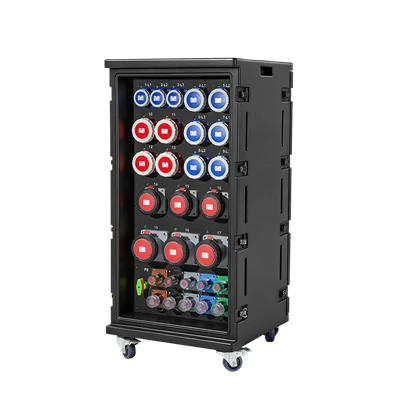
![HDPE Portable Power Distribution Box]() HDPE Portable Power Distribution BoxOur HDPE Portable Power Distribution Box is a heavy-duty mobile temporary power cabinet engineered for construction sites, outdoor events, factory workshops, and engineering temporary power projects.
HDPE Portable Power Distribution BoxOur HDPE Portable Power Distribution Box is a heavy-duty mobile temporary power cabinet engineered for construction sites, outdoor events, factory workshops, and engineering temporary power projects. -
![32Amp Portable Rubber Power Distribution Box]() 32Amp Portable Rubber Power Distribution BoxThe 32Amp Portable Rubber Power Distribution Box is a heavy-duty, temporary power distribution solution built for industrial and event use. Constructed with a robust rubberized/impact-resistant
32Amp Portable Rubber Power Distribution BoxThe 32Amp Portable Rubber Power Distribution Box is a heavy-duty, temporary power distribution solution built for industrial and event use. Constructed with a robust rubberized/impact-resistant -
![ABS Power Distribution Box]() ABS Power Distribution BoxAn ABS Power Distribution Box is a lightweight yet highly durable electrical enclosure designed to safely house circuit breakers, wiring systems, and power distribution components. Manufactured from
ABS Power Distribution BoxAn ABS Power Distribution Box is a lightweight yet highly durable electrical enclosure designed to safely house circuit breakers, wiring systems, and power distribution components. Manufactured from -
![HDPE Power Distribution Unit]() HDPE Power Distribution UnitThis high-density polyethylene (HDPE) power distribution unit is a heavy-duty portable power solution designed for construction sites, industrial facilities, outdoor activities, and temporary power
HDPE Power Distribution UnitThis high-density polyethylene (HDPE) power distribution unit is a heavy-duty portable power solution designed for construction sites, industrial facilities, outdoor activities, and temporary power


Distribution Box Material Selection
Engineered for industrial power distribution boxes, this matrix guides the selection of optimal enclosure materials to match specific on-site environmental conditions and severe mechanical stress.
| Enclosure Material | Key Engineering Action | Impact Resistance (IK Rating) | Ingress Protection (IP Range) | Optimal Working Environment & Failure Mode Prevention |
|---|---|---|---|---|
| Thermoplastic | Isolate / Shield | IK08 | IP65 - IP66 | Indoor workshops, food processing plants. Prevents electrical tracking and chemical washdown corrosion. |
| HDPE | Resist / Support | IK09 | IP65 - IP67 | Outdoor construction sites, civil engineering. Resists UV degradation and structural stress cracking under load. |
| Rubber | Absorb / Cushion | IK10 | IP67 | Heavy industrial mining, temporary event staging, shipyards. Absorbs severe mechanical shocks; prevents cracking from heavy vehicle run-overs. |
| Stainless Steel | Contain / Protect | IK10 | IP54 - IP66 | Marine environments, offshore oil rigs, chemical processing. Withstands high-salinity corrosion and extreme thermal exposure (-25°C to +60°C). |
Material Categories & Specifications
Thermoplastic Power Distribution Boxes
Engineering Brief: Molded from high-grade, flame-retardant engineering polymers. These enclosures offer excellent dielectric strength and non-conductive safety profiles.
Components & Integration: Pre-fitted with transparent polycarbonate viewing windows for rapid MCB status inspection. Ideal for wall-mounted internal secondary sub-distribution.
HDPE Power Distribution Boxes
Engineering Brief: Extruded from High-Density Polyethylene, creating a high strength-to-density ratio chassis. It resists environmental stress cracking and structural warping under prolonged solar radiation.
Components & Integration: Designed with integrated top handles and stackable bases for rapid deployment in mobile commercial fleets.
Rubber Distribution Boxes
Engineering Brief: Vulcanized solid rubber housing engineered to deform and rebound upon high-energy impacts without fracturing internal DIN rails or busbar brackets.
Components & Integration: Fitted with heavy-duty recessed CEE sockets and internal terminal blocks, providing shockproof structural protection in high-vibration mining zones.
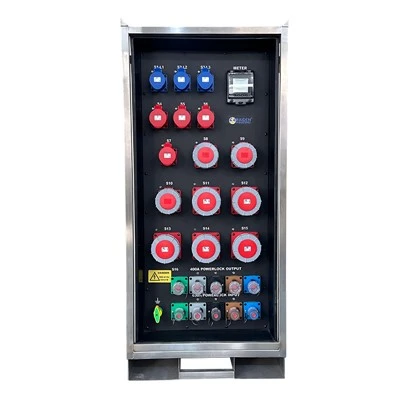
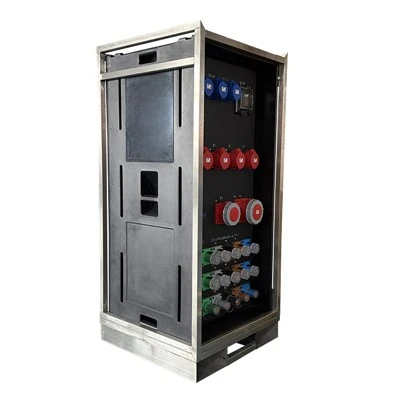
Stainless Steel Power Distribution Cabinets
Engineering Brief: Fabricated from 1.5mm to 2.0mm Grade 304 or 316 marine-grade stainless steel. Continuously welded seams provide severe weather shielding and high-salinity corrosion resistance.
Components & Integration: Equipped with heavy-duty chrome-plated locking handles, louvered ventilation panels, and inner zinc-plated mounting plates for large-current 125A–400A MCCB integration.
❓ Frequently Asked Technical Questions
Direct operational answers from our lead electrical configuration engineers.
1: When should I specify a Rubber Distribution Box over an HDPE model for temporary site power?
A: Specify a solid rubber distribution box when the equipment will be subjected to high-frequency transport, dropping, or potential vehicle crushing (e.g., shipyards, heavy mining, concert staging). Rubber absorbs kinetic energy via physical deformation, whereas HDPE boxes are rigid and better suited for static outdoor construction sites requiring prolonged UV exposure resistance and high ingress protection (IP67) stability.
2: What are the thermal de-rating factors for Thermoplastic Power Distribution Boxes operating under full load?
A: Thermoplastic enclosures have lower thermal dissipation coefficients compared to stainless steel. When operating under continuous full load in ambient temperatures exceeding 40°C, internal air temperature rises. To prevent premature thermal tripping of MCBs, we recommend calculating a 0.85 de-rating factor on circuit breakers or integrating louvered ventilation systems.
3: Which stainless steel grade should be selected for power distribution panels in coastal or marine environments?
A: For coastal environments (high salinity and humidity), Grade 316 Stainless Steel must be selected over Grade 304. Grade 316 contains 2-3% molybdenum, which actively resists pitting and crevice corrosion caused by chloride ions.
🛠️ Engineering Design Support & RFQ Processing
Do you require custom socket configurations, specialized wiring schematics, or specific material thickness for your power distribution cabinets? Submit your single-line electrical diagrams (SLD) or load schedules directly to our engineering division. Our technical team delivers certified CAD dimension drawings and localized commercial quotes within 24 hours.
Popular Products