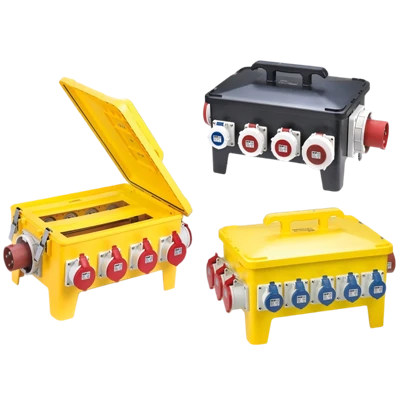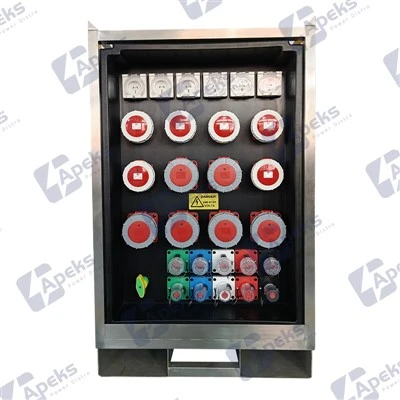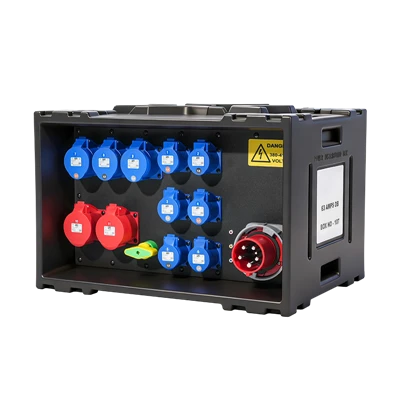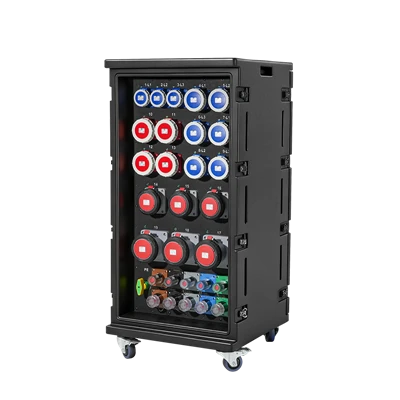
For procurement teams and electrical contractors, the main objective is to match the distribution box to the actual operating conditions. A suitable unit should support the planned loads, provide appropriate protection for each outgoing circuit, and fit the installation method without unnecessary adapters or modifications.

How Do You Choose the Right Incoming Power Supply?
Before comparing products, confirm the power supply available at the installation site. A 63A rating alone does not indicate whether the distribution box is designed for single-phase or three-phase operation. The incoming voltage, number of phases, frequency, earthing arrangement, and connector type must all match the site supply.
Three-phase 63A distribution boxes are often considered for installations that need to supply several circuits or equipment groups. However, the actual configuration depends on the connected loads and the electrical system available.
|
Item to Confirm |
Why It Matters |
|---|---|
|
Supply voltage |
Must match the rated input of the distribution box and connected equipment. |
|
Single-phase or three-phase |
Determines the input connection and how loads can be distributed. |
|
Input connector |
Must be compatible with the site's plug, socket, or fixed wiring arrangement. |
|
Earthing system |
Must suit the installation and local electrical requirements. |
|
Available supply capacity |
The upstream supply must be able to support the planned demand. |
Do not select a three-phase unit simply because it has a 63A rating. Confirm the site's supply arrangement first, especially when the equipment will be moved between venues or project locations.
Match the Distribution Box to Different Power Loads
The connected equipment determines how the outgoing circuits should be arranged. A 63A distribution box may supply a combination of high-current machinery, general-purpose tools, lighting systems, and smaller electrical devices. The number and type of outputs should reflect the equipment list rather than simply maximizing the number of sockets.
Different loads also behave differently during operation. Motors, compressors, and some power tools may draw a higher starting current than their normal running current, while heaters and lighting equipment have different operating characteristics. These conditions should be considered when selecting protective devices and planning circuit allocation.
|
Power Load Type |
Typical Distribution Considerations |
|---|---|
|
Construction machinery |
Check motor starting current, running current, and the protection requirements of each machine. |
|
Stage and event equipment |
Provide suitable outlets for audio systems, lighting equipment, control devices, and auxiliary loads. |
|
Industrial tools |
Consider operating duration, load variation, and whether equipment needs dedicated circuits. |
|
Temporary lighting |
Distribute lighting circuits separately where practical to simplify fault identification. |
|
Mixed equipment loads |
Combine suitable outlet types while ensuring that each circuit remains within its rated capacity. |
A distribution box should not be selected solely by adding up the nominal ratings printed on its sockets. The actual connected demand, expected simultaneous operation, upstream protection, and current-carrying capacity of each circuit must all be assessed by a qualified electrical professional.
What Output Socket Combination Does Your Equipment Need?
A 63A distribution box can be configured with different combinations of industrial sockets, depending on the required output voltage and current. For example, a three-phase input unit may provide three-phase outlets for larger equipment and single-phase outlets for smaller devices. The exact combination should follow the electrical requirements of the installation.
Before placing an order, prepare an outlet schedule covering each device or equipment group. This helps prevent a common procurement problem: receiving a distribution box with sufficient overall capacity but unsuitable outlet types or too few connections for the actual job.
Consider the following points:
- Socket current ratings: Match each outlet to the current required by the connected equipment.
- Voltage and phase: Confirm whether each load needs single-phase or three-phase power.
- Connector standard: Check pin configuration, rated voltage, and compatibility with existing cables and plugs.
- Outlet quantity: Allow enough connections for planned equipment without relying on multiple adapters.
- Future flexibility: Consider whether the same box will be used for different equipment combinations on later projects.
IEC 60309 industrial plugs and sockets are common in temporary power applications. However, connector color alone should not be treated as the only compatibility check; voltage, pin arrangement, current rating, and the applicable standard must also be confirmed.
Selecting Circuit Protection for Different Loads
Circuit protection is a central part of choosing a 63A distribution box. The incoming supply and outgoing circuits have different protection requirements, so buyers should check the protective devices included in the design rather than assuming that the main rating covers every connected load.
Several devices may be used within the same unit, depending on its design:
- Main isolator: Allows the distribution box to be disconnected from its incoming supply for appropriate operation or maintenance procedures.
- Miniature circuit breaker (MCB): Provides overcurrent protection for a circuit within its rated application.
- Residual current device (RCD): Detects residual current and disconnects the supply when its operating conditions are met.
- Residual current circuit breaker with overcurrent protection (RCBO): Combines residual-current and overcurrent protection for an individual circuit.
The appropriate arrangement depends on the installation, local regulations, equipment characteristics, and upstream protective system. In particular, the selected devices must have suitable ratings and breaking capacity for the available fault current.
Individual circuit protection can also make troubleshooting easier. If one connected tool or equipment group develops a fault, a properly designed circuit arrangement may limit the effect on other loads. The exact degree of circuit independence depends on how the protection is configured.
Which Enclosure Protection Rating Suits Your Working Environment?
The enclosure must suit the physical environment in which the distribution box will operate. Construction sites may expose equipment to dust, impact, and changing weather conditions, while event installations may involve outdoor stages, temporary cable routes, and frequent transportation between venues.
An IP rating describes protection against the ingress of solid objects and water under specified test conditions. It does not, by itself, indicate resistance to impact, corrosion, UV exposure, or every outdoor condition.
|
Installation Environment |
Selection Considerations |
|---|---|
|
Indoor workshops |
Consider dust exposure, mechanical damage, mounting method, and access for operation. |
|
Outdoor construction sites |
Assess rain, dust, cable entry points, impact risks, and the required IP rating. |
|
Concerts and festivals |
Consider outdoor exposure, transport frequency, socket access, and cable management. |
|
Damp or washdown areas |
Confirm whether the enclosure and all installed components are suitable for the actual moisture exposure. |
|
Coastal or corrosive environments |
Evaluate enclosure materials, metal finishes, fasteners, and corrosion protection. |
IP44 and IP65 are examples of ratings buyers may encounter when comparing distribution boxes. The appropriate level depends on the installation conditions and applicable requirements. Even a box with a higher IP rating can lose protection if unsuitable cable glands, connectors, covers, or installation methods are used.
For mobile applications, also check the enclosure's resistance to handling damage, the strength of its handles, and whether its weight is manageable for the intended transport method.
Cable Size, Input Connections, and Installation Space
The cable and input connection must be compatible with the distribution box's rated current and the installation conditions. Selecting a 63A unit does not automatically mean that every cable connected to it is suitable for carrying 63A under all circumstances.
Cable selection depends on conductor material, cross-sectional area, cable length, insulation temperature rating, installation method, ambient temperature, grouping with other cables, and voltage-drop requirements. The selected cable must also be compatible with the input connector or terminals.
During procurement, confirm:
- Whether the input uses an industrial plug, panel-mounted inlet, or fixed wiring terminals.
- Whether the cable conductor material and cross-section are supported by the connection terminals.
- Whether the cable length and installation route are suitable for the expected load.
- Whether strain relief and cable glands are provided where required.Whether the enclosure has enough internal space for the protective
- devices, wiring, and maintenance access.
For portable distribution boxes, cable handling is particularly important. Cables may be repeatedly connected, disconnected, coiled, and moved across work areas. Suitable cable routing and mechanical protection help reduce damage at connection points.
The final cable sizing and installation method should be confirmed by a qualified electrician in accordance with the applicable electrical code.
How Important Are Portability and Daily Operation?
A 63A distribution box may be installed in a fixed position or used as mobile equipment for changing project layouts. Its physical design should match the way workers will transport, position, connect, and inspect it.
For construction projects, buyers may prioritize a stable enclosure, practical mounting options, and access to outlets when the unit is positioned near machinery. For event rental companies, transport handles, stackability, clearly identified outputs, and easy inspection of protection devices may be more important.
Operational details worth checking include:
- Layout and labeling: Clearly identified circuits reduce confusion when several teams share a power source.
- Access to protection devices: Operators should be able to identify and inspect the relevant devices without unnecessary handling.
- Socket positioning: Outlet locations should allow plugs and cables to connect without excessive bending or interference.
- Maintenance access: Internal components should be accessible to authorized personnel following the required isolation procedures.
- Transport requirements: Check the enclosure dimensions, weight, handles, and storage arrangements before ordering in bulk.
A practical layout can save time during setup and make routine inspection easier, particularly when the distribution box is reused across multiple sites.
Can a 63A Distribution Box Be Customized for Your Project?
A standard 63A distribution box may be suitable for recurring applications, but project-specific equipment lists can require a different combination of outputs, protective devices, and enclosure features. Customization is useful when the buyer needs the distribution box to fit an existing power system or a defined workflow.
Common configuration items include:
- Input arrangement: Industrial connector type, pole configuration, and rated voltage.
- Output layout: The quantity and ratings of single-phase and three-phase sockets.
- Protection devices: The required combination of main switching, overcurrent protection, and residual-current protection.
- Enclosure design: Material, dimensions, IP rating, mounting method, and transport features.
- Identification: Circuit labels, warning markings, and project-specific identification requirements.
To obtain a clear quotation, provide the supplier with the intended application, incoming supply details, equipment list, required socket schedule, installation environment, destination market, and expected order quantity. Drawings or photographs of existing equipment can also help clarify connector compatibility and layout restrictions.
The supplier should confirm which features are standard and which require engineering review. Any changes to electrical components or internal wiring should be assessed against the applicable safety and conformity requirements.
Why Choose APEKS ELECTRIC for 63A Distribution Boxes?
APEKS ELECTRIC CO., Ltd. manufactures power distribution boxes for temporary event power and construction site applications, serving contractors, distributors, rental companies, and engineering businesses. Its product range includes distribution equipment with different current ratings and configurable internal layouts.
For buyers evaluating a 63A distribution box, the following areas are relevant when discussing a project with the supplier:
Application-Based Configuration: Define the input connection, output socket arrangement, and protection requirements according to the equipment to be powered.
Project Customization: Discuss enclosure material, dimensions, mounting method, and internal layout for the intended installation.
Technical Coordination: Confirm electrical ratings, connector standards, protection devices, and documentation before approving the final design.
Bulk and OEM Requirements: Communicate order quantities, labeling needs, and repeat-production specifications for procurement planning.
Providing a complete specification at the quotation stage helps reduce uncertainty around socket compatibility, protective-device selection, and enclosure requirements.