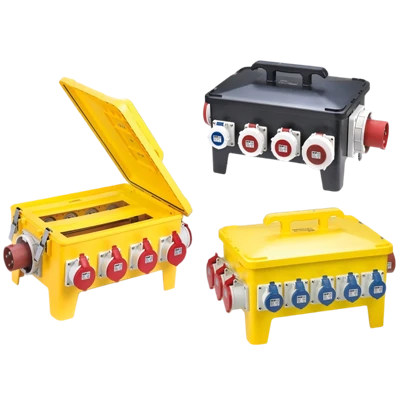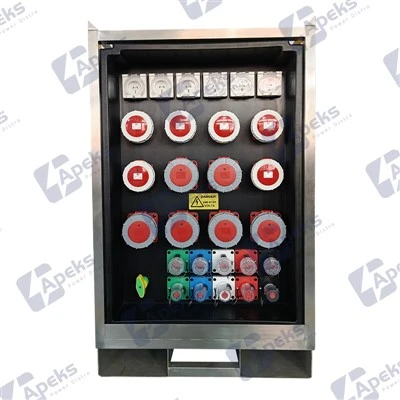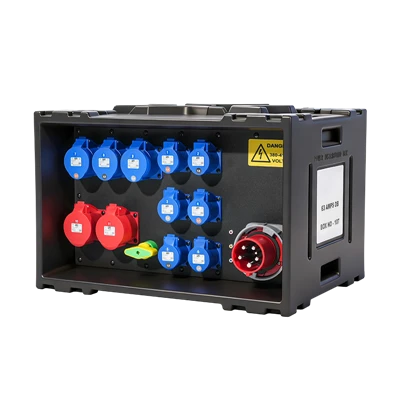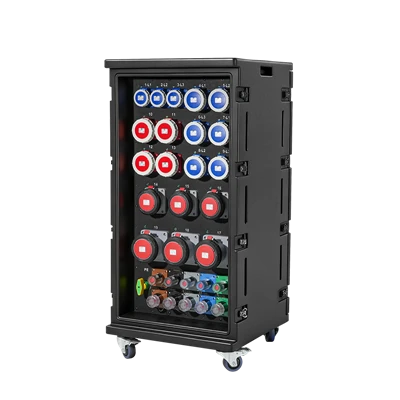
The selection process should reflect how the event will operate from load-in to the final shutdown. Equipment locations, power demand changes, generator arrangements, cable distances, and access restrictions can all influence the required configuration. Buyers should therefore evaluate the distribution box as part of the complete temporary power system, rather than treating 400A as the only specification that matters.

Identify the Event's Power Distribution Structure
The first step is to establish the relationship between the main power source, the 400A distribution box, and the downstream equipment. At a large venue, power is usually divided into several zones so that individual teams can manage their equipment without routing every connection back to one location.
For example, a concert may use separate downstream panels for stage lighting, audio equipment, video production, and backstage services. A trade exhibition may need independent supplies for exhibition booths, demonstration machinery, registration systems, and temporary offices.
When planning the distribution structure, consider:
- Central distribution location: Choose a position that provides practical access to the incoming supply and outgoing cable routes.
- Zone separation: Group equipment according to its physical location and operational function.
- Downstream panel placement: Position secondary distribution points close enough to their assigned loads to manage cable runs.
- Access control: Keep electrical equipment away from public circulation areas and restrict access to authorized personnel.
- Operational continuity: Identify equipment groups that need separate circuits or additional attention during shutdown and fault response.
The main distribution box should be positioned according to the site layout, cable distances, environmental exposure, and applicable safety requirements. Its location should be coordinated with stage construction and other temporary infrastructure before equipment delivery.
Which Electrical Loads Need Separate Feeders?
Not all event equipment has the same electrical characteristics or operating schedule. Lighting systems may change demand between setup, rehearsal, and performance. Audio equipment may operate continuously during a show, while catering appliances and temporary facilities follow different usage patterns.
Separating suitable load groups into dedicated feeders helps make the distribution plan easier to understand and manage. It can also simplify fault identification when a problem occurs in one part of the venue.
|
Event Zone |
Feeder Planning Approach |
|---|---|
|
Main stage |
Review the requirements of lighting, audio, video, and stage support equipment. |
|
Lighting towers |
Consider equipment ratings, control systems, and the locations of individual towers. |
|
Production control |
Provide suitable connections for consoles, computers, communication equipment, and control systems. |
|
Catering area |
Assess appliance demand and whether dedicated circuits are required. |
|
Backstage facilities |
Account for temporary offices, charging stations, refrigeration, and service equipment. |
|
Exhibition or vendor areas |
Confirm the requirements of individual booths and demonstration equipment. |
The event electrician should prepare a load schedule that records equipment ratings, expected simultaneous operation, and any special starting or operating characteristics. The design must also consider phase allocation where single-phase loads are supplied from a three-phase system.
A 400A distribution box should not be assumed to provide 400A to every connected feeder. The main rating, incoming supply, protective devices, and outgoing circuit ratings determine how the available capacity can be distributed.
Evaluate Generator Compatibility and Supply Conditions
Some large events receive power from the venue's fixed electrical infrastructure, while others use temporary generators or a combination of approved sources. The supply arrangement affects the design of the distribution box and must be confirmed before selecting its input connection.
When a generator is involved, buyers and electrical contractors should check the generator's rated output, voltage, phase configuration, frequency, and protective arrangements. They should also consider how the generator responds to changing loads, particularly when large lighting systems, motors, or other equipment switch on.
Important checks include:
- Rated supply capacity: Confirm that the source can support the planned event demand.
- Voltage and frequency: Match the distribution equipment and connected loads to the available supply.
- Input interface: Specify the required cable termination or connector arrangement.
- Earthing and protection: Confirm that the distribution design is compatible with the approved source and earthing arrangement.
- Source switching: Where multiple supplies are used, establish the required changeover arrangement and prevent unsafe interconnection.
If a venue uses multiple generators or has a backup source, the switching and interlocking design must be addressed separately by qualified electrical professionals. A distribution box should not be connected to multiple sources without a properly designed and approved arrangement.
Protection and Fault Management During Live Events
Electrical faults during a performance or exhibition can affect equipment in different areas of the venue. The protection arrangement should be designed to protect the conductors and connected equipment while considering the operational consequences of disconnecting a feeder or the main supply.
A 400A distribution box may contain a main protective device and several outgoing feeder breakers. The selected devices must be appropriate for the rated characteristics of the system and the prospective fault current at the installation point.
The main device protects or isolates the incoming distribution assembly according to its specified function. Outgoing protective devices are selected for their individual feeders, taking account of cable capacity, connected loads, and downstream protection.
Where practicable, the protection design should allow a fault on one downstream circuit to be cleared without unnecessarily disconnecting other unaffected circuits. This requires coordination between the protective devices and cannot be guaranteed simply by choosing breakers with different current ratings.
Residual-current protection may be required for particular circuits or installation conditions. The appropriate device type and operating characteristics depend on local requirements and the connected equipment.
The distribution system must be compatible with the venue's approved earthing and bonding arrangement. Required inspection and testing should be completed before energization, and only authorized personnel should carry out electrical work.
For events where lighting, audio, or video systems are operationally critical, the distribution plan should also identify which loads are essential and how the responsible team will respond to a loss of supply.
What Enclosure Design Works for Repeated Event Use?
Distribution equipment used by event rental companies may be transported, installed, operated, dismantled, and stored many times. The enclosure should therefore be evaluated for both its electrical function and its handling requirements.
For outdoor festivals, the required ingress protection and resistance to environmental exposure are important. For indoor exhibitions, cable access, enclosure placement, and protection against accidental impact may be more significant.
|
Design Feature |
Why It Matters for Event Operations |
|---|---|
|
Enclosure material |
Should suit the expected impact, corrosion, and environmental conditions. |
|
IP rating |
Defines protection against ingress under specified test conditions. |
|
Cable entry layout |
Helps organize large incoming and outgoing conductors. |
|
Mounting or support |
Keeps the assembly stable in its intended installation position. |
|
Access to devices |
Supports inspection and authorized operation. |
|
Identification labels |
Helps crews locate the correct feeder during setup and troubleshooting. |
|
Transport provisions |
Should match the assembly's weight, dimensions, and handling method. |
An IP rating does not automatically establish resistance to impact, UV exposure, or corrosion. These characteristics should be evaluated separately when the event environment requires them.
For a large assembly, transport and positioning arrangements should be planned before delivery. Any lifting equipment or handling points must be suitable for the unit's weight and intended method of movement.
Prepare the Distribution Box for Fast Setup and Removal
Event power installations often operate under tight schedules. The distribution box must be delivered, positioned, connected, checked, and commissioned before equipment testing or rehearsals begin. After the event, the system must be isolated and dismantled within the venue's access window.
A configuration that matches the approved electrical drawings can reduce confusion during installation. Clearly identified incoming and outgoing connections help crews confirm feeder destinations, while accessible protective devices support inspection and operation by authorized personnel.
Before ordering, consider the following practical requirements:
- Feeder labels: Use clear identification that matches the site power schedule.
- Drawing consistency: Ensure the delivered layout corresponds to the approved wiring diagram.
- Cable access: Confirm that large conductors can be installed without obstructing adjacent connections.
- Inspection space: Leave sufficient room for required checks and safe maintenance procedures.
- Storage and transport: Plan how the enclosure will be moved and protected between events.
Post-event checks: Establish procedures for inspecting the enclosure, connectors, and cables after dismantling.
For rental operations, recording the approved configuration and inspection history can also help maintain consistency across repeated deployments.
Custom Configuration for Concerts, Festivals, and Exhibitions
A 400A distribution box may need a different feeder arrangement depending on the event type. A concert production company may prioritize separate stage-related feeders, while an exhibition contractor may need a layout that supports multiple temporary zones and demonstration areas.
Potential configuration requirements include:
- Incoming supply arrangement: Specify the required input connection and electrical characteristics.
- Feeder quantity and ratings: Define the downstream circuits needed for the event.
- Protective device selection: Identify the required main and outgoing protection based on the approved design.
- Enclosure layout: Set the dimensions, mounting method, cable entry positions, and environmental requirements.
- Circuit identification: Align labels with the event's feeder schedule and site drawings.Project documentation: Specify the drawings, test
- records, and conformity documents needed for approval.
When requesting a quotation, provide the supplier with the event's load schedule, single-line diagram, incoming supply details, feeder list, installation environment, and destination market. Include any requirements for repeated production if the equipment will be used across multiple events.
Customization should be completed through a technical review. Changes to protective devices, conductors, or internal layouts must be checked for their effect on current ratings, temperature performance, fault protection, and applicable conformity requirements.
APEKS ELECTRIC for Event Power Distribution
APEKS ELECTRIC CO., Ltd. supplies power distribution equipment for temporary events and construction site applications. For large event projects, buyers should establish the required electrical configuration and installation conditions before selecting a distribution box.
When discussing a 400A distribution project with APEKS ELECTRIC, provide the information needed to review the proposed arrangement:
Event layout: Identify the main power location, downstream panels, and equipment zones.
- Feeder schedule: Specify the number of circuits, connection types, and required ratings.
- Environmental requirements: Confirm whether the equipment will be used indoors, outdoors, or in areas exposed to moisture and dust.
- Technical review: Confirm the input interface, protection arrangement, enclosure details, and required documentation.
- Repeat-use needs: Define labeling and configuration requirements for equipment used across recurring events.
A complete project specification makes it easier to establish whether the proposed distribution box matches the intended application and identifies any outstanding technical details before manufacturing.