In the Business of Renting Temporary Power Distribution Boxes, Which Vulnerable Components Require Priority Maintenance?
Rental distribution equipment is repeatedly transported, connected, energized, disconnected, and stored. Maintenance should therefore prioritize components exposed to mechanical wear, electrical loading, moisture, contamination, and repeated connection cycles.
Why Does Rental Equipment Need a Different Maintenance Focus?
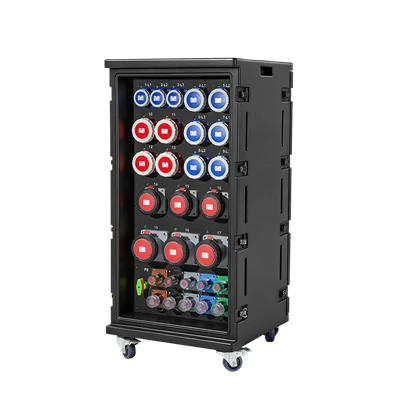
A Temporary Power Distribution Box used for rental service does not remain in one controlled installation. The same unit may be loaded onto a vehicle, moved between venues, connected to temporary cables, exposed to outdoor conditions, and returned to a warehouse within a short operating cycle. These repeated operations place mechanical stress on enclosures, connectors, cable entries, terminals, protective devices, and switching components.
For rental companies, maintenance should therefore focus on components whose condition can change through repeated handling or connection. A visual inspection should be combined with electrical and functional checks where applicable, while abnormal findings should be recorded before the unit is released for another project.
Industrial Connectors
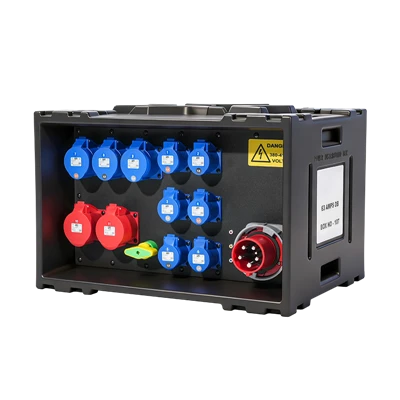
Plugs and sockets experience repeated insertion, removal, cable pulling, and mechanical impact. Inspect contact surfaces, housings, locking mechanisms, terminals, and signs of overheating or deformation.
Cable Glands and Entries
Cable entries provide mechanical retention and contribute to enclosure protection. Loose glands, damaged seals, or excessive cable movement can affect both mechanical security and protection against dust or moisture.
Protective Devices
Circuit breakers, residual-current protection, fuses, and related protective components should be checked for correct identification, mechanical operation, visible damage, and functional condition according to the applicable procedure.
Internal Terminals
Repeated transportation and vibration can affect terminal connections. Maintenance should check conductor termination, signs of discoloration, loose hardware, damaged insulation, and evidence of excessive heating.
Which Components Should Rental Companies Inspect First?
Priority should be determined by the component's exposure to repeated operation and the consequence of deterioration. Components involved in power connection, protective functions, mechanical retention, and current-carrying paths generally deserve closer inspection than static enclosure surfaces.
| Component | Main Exposure | Inspection Focus | Maintenance Priority |
|---|---|---|---|
| Connectors | Repeated mating, impact, cable movement | Contacts, housing, locking, heating, mechanical damage | High |
| Cable Entries | Pulling, bending, vibration, moisture | Gland tightness, sealing, cable jacket condition | High |
| Protective Devices | Repeated switching, fault operation, electrical loading | Labels, mechanism, visible condition, functional verification | High |
| Internal Terminals | Vibration, thermal cycling, repeated transport | Loose connections, discoloration, insulation damage | High |
| Enclosure and Cover | Impact, weather, repeated opening | Cracks, deformation, hinges, seals, fasteners | Medium to High |
Why Do Connectors Require Frequent Inspection?
Rental distribution boxes can accumulate a large number of connection cycles during their service life. Industrial connectors may be connected at different venues by different operators, while cables can be pulled, bent, or placed under mechanical stress during installation. These conditions can affect contact surfaces and mechanical locking components.
Inspection should include the connector housing, contact area, locking mechanism, cable termination, and visible signs of heat. A connector showing cracking, deformation, looseness, abnormal discoloration, or damaged insulation should be removed from service for further evaluation rather than returned directly to the rental pool.
What Should Be Checked Around Cable Entries?
Cable glands and entry points experience pulling and bending forces every time a distribution box is installed or removed. The gland must retain the cable without damaging the outer jacket, while the enclosure entry should maintain the intended protection against environmental exposure.
Check gland bodies, locking components, sealing elements, cable jackets, and the surrounding enclosure material. Particular attention is required when a cable has been pulled sharply or when the distribution box has been used outdoors under wet or dusty conditions.
How Should Protective Devices Be Maintained in Rental Distribution Boxes?
Protective devices are exposed to switching operations and may also operate during electrical faults. Circuit breakers, residual-current protection, fuses, and associated components should therefore be checked for correct identification, physical damage, signs of overheating, and appropriate functional condition according to the applicable testing procedure.
Maintenance records should identify the distribution box, protective-device configuration, inspection date, observed condition, and any component replaced. If a protective device has repeatedly operated during rental use, the cause of the operation should be investigated instead of treating replacement of the device as the complete corrective action.
A replacement protective device does not resolve an underlying overload, short circuit, damaged cable, loose connection, or incorrect circuit configuration. The event causing the protection to operate should also be investigated.
Why Should Internal Terminals and Busbar Connections Be Checked?
Internal terminals carry the electrical connections between incoming circuits, protective devices, busbars, and outgoing circuits. Repeated transportation, vibration, thermal cycling, and previous maintenance work can affect mechanical connections even when the external enclosure appears undamaged.
Maintenance personnel should look for loose hardware, conductor movement, damaged insulation, abnormal discoloration, heat-related marks, and changes around termination points. Any tightening or replacement procedure should follow the equipment design and appropriate electrical maintenance procedure rather than relying on an assumed torque value when the manufacturer's specification is unavailable.
What Should Be Checked When a Rental Unit Returns to the Warehouse?
Visual Condition
Record enclosure damage, cracked connectors, missing covers, damaged labels, contamination, water exposure, and cable-entry problems.
Electrical Condition
Perform the electrical checks required by the maintenance procedure, including relevant continuity, insulation, or functional tests.
Component Condition
Check connectors, breakers, terminals, glands, covers, handles, mounting hardware, and protective components for wear.
Rental Record
Record the previous project, reported faults, inspection result, repairs, replaced components, and release status.
When Should a Rental Distribution Box Be Removed for Further Maintenance?
A rental unit should not automatically return to the available equipment pool after a basic visual inspection. Certain findings indicate that the distribution box requires further inspection, electrical testing, repair, or component replacement before another rental cycle.
- Cracked, deformed, or damaged enclosure components
- Damaged plugs, sockets, locking mechanisms, or connector housings
- Loose or damaged protective earth connections
- Visible overheating, discoloration, or melting around terminals
- Damaged cable insulation or cable-entry components
- Unexpected insulation or continuity test results
- Repeated operation of a protective device without an identified cause
What Maintenance Features Should Rental Companies Consider When Purchasing New Units?
Rental companies should evaluate maintenance requirements before purchasing distribution equipment because the same unit may complete many installation cycles over its service life. The enclosure construction, connector arrangement, protection devices, internal layout, cable-entry design, and accessibility of service components can directly affect inspection and repair work.
| Purchase Point | What to Confirm | Maintenance Relevance |
|---|---|---|
| Connector Configuration | Connector type, rated current, quantity, mounting and locking arrangement | Repeated connection cycles create mechanical wear |
| Enclosure | Material, protection class, access panels and mechanical construction | Affects resistance to transport and environmental exposure |
| Internal Layout | Protective devices, terminals, busbars and service accessibility | Determines how easily components can be inspected and serviced |
| Documentation | Circuit identification, configuration information and maintenance records | Supports repeatable inspection and fault diagnosis |
Why Choose APEKS ELECTRIC CO., Ltd.?
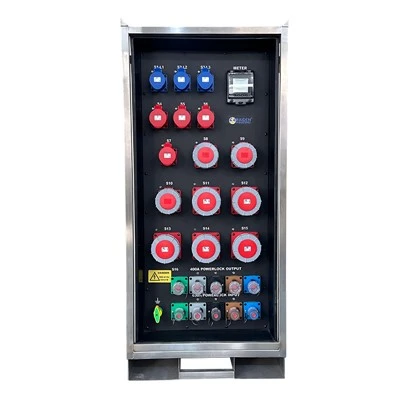
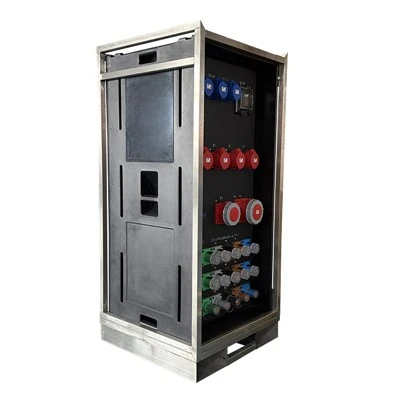
APEKS ELECTRIC CO., Ltd. supplies power distribution equipment for temporary event power, construction sites, exhibitions, stage systems, rental projects, and industrial applications. Its product range includes Event Power Distribution Boxes, Temporary Power Distribution Boxes, Portable Power Distribution Boxes, Stage Power Distribution Panels, Construction Power Distribution Boxes, Site Power Distribution Boards, Outdoor Power Distribution Cabinets, and Industrial Power Distribution Boxes.
Rental and Temporary Applications
The product range includes temporary and portable distribution configurations suitable for rental operations, event power systems, construction-site distribution, exhibitions, and stage-related electrical systems.
Multiple Current Configurations
APEKS ELECTRIC CO., Ltd. lists rated-current options including 32A, 63A, 125A, 200A, 400A, and 630A, allowing the distribution configuration to be matched to different project requirements.
OEM and ODM Configuration
OEM and ODM customization is available for internal layouts, protection devices, enclosure configurations, and other project-specific distribution requirements.
Key Maintenance Considerations for Rental Operators
The highest-maintenance components in a Temporary Power Distribution Box are generally those exposed to repeated connection, movement, switching, electrical loading, and environmental conditions. Rental operators should prioritize connectors, cable entries, protective devices, internal terminals, protective earth paths, and enclosure components. Inspection results should be linked to the individual equipment unit so that repeated faults, replaced components, and maintenance history can be identified before the next rental deployment.