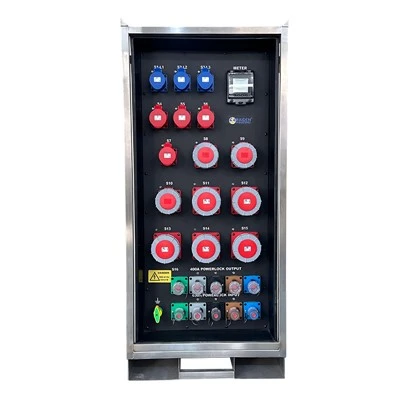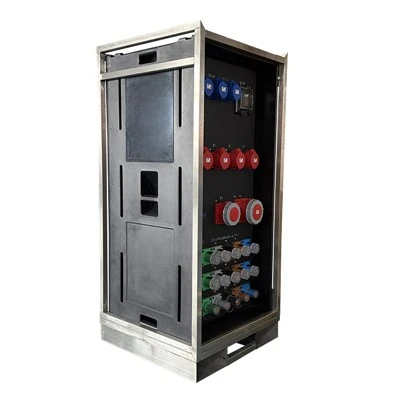
Outdoor music festivals operate temporary electrical systems in uncontrolled environments where rainwater, mud, dust, spilled liquids, and mechanical impact directly affect power distribution equipment.
Temporary power distribution boxes installed at festivals supply electricity to:
Audio amplifiers
LED walls
Stage lighting systems
Food vendor equipment
Broadcast systems
HVAC equipment
Mobile charging stations
These systems often remain energized for 12–72 continuous operating hours while exposed to outdoor weather conditions.
An IP67-rated distribution box prevents water and particulate ingress into live electrical components during temporary outdoor operation.
What Does IP67 Mean
IP ratings are defined under IEC 60529.
The first digit defines solid particle protection.
The second digit defines water ingress protection.
IP67 means:
| IP Code | Protection Description |
|---|---|
| 6 | Dust-tight enclosure |
| 7 | Protection against temporary immersion in water |
For electrical distribution equipment, IP67 protection requires:
Sealed enclosure joints
Waterproof cable glands
Gasketed access covers
Sealed connector interfaces
Compression-based sealing structures
Temporary immersion protection is typically verified through controlled water exposure testing.
Environmental Conditions at Outdoor Music Festivals
Festival power systems operate in highly variable outdoor conditions.
Typical environmental exposure includes:
| Condition | Electrical Impact |
|---|---|
| Heavy rain | Water ingress |
| Mud accumulation | Conductive contamination |
| Airborne dust | Ventilation blockage |
| Beverage spills | Short-circuit risk |
| Stage fog fluid | Condensation formation |
| UV radiation | Polymer degradation |
| Cable pulling | Seal deformation |
Electrical distribution boxes positioned near stages or food zones are frequently exposed to direct surface water runoff.
Ground-installed feeder connections may remain partially submerged during rainfall events.
Water Ingress Risks in Temporary Power Systems
Water entering an energized distribution box changes the resistance between conductive components.
Moisture accumulation can create unintended conductive paths between:
Phase conductors
Neutral bars
Ground terminals
Breaker terminals
This can produce leakage currents large enough to trip RCCBs or damage switching devices.
Example failure sequence:
Rainwater enters through unsealed cable entry
Moisture reaches breaker terminals
Surface tracking begins across insulation
Localized heating develops
Breaker trips or terminal carbonizes
Outdoor festivals commonly operate during high humidity conditions above 80% RH, which accelerates condensation inside non-sealed enclosures.
Dust and Mud Contamination During Events
Festival grounds generate large amounts of particulate contamination.
Common contamination sources include:
Dry soil dust
Sand particles
Grass debris
Mud splashes
Metallic stage dust
Dust accumulation inside electrical enclosures can:
Reduce insulation resistance
Trap moisture
Block cooling airflow
Increase contact resistance
Mud contamination is especially dangerous because wet soil may contain dissolved salts and minerals that increase electrical conductivity.
An IP67 enclosure prevents particulate intrusion into:
Busbar chambers
Breaker terminals
Neutral assemblies
Internal wiring compartments
Internal Structure of IP67 Distribution Boxes
An IP67 festival distribution box typically contains multiple sealing layers.
Common structural elements include:
| Component | Function |
|---|---|
| Silicone gasket | Door sealing |
| Compression latch | Uniform enclosure pressure |
| IP67 cable gland | Sealed cable entry |
| Rubber socket cap | Outlet sealing |
| Polycarbonate inspection window | Meter protection |
| Stainless steel fasteners | Corrosion resistance |
Internal power distribution commonly uses:
Copper busbars
DIN-rail mounted breakers
Rubber-insulated wiring
Thermoplastic terminal blocks
Outdoor systems frequently use UV-stabilized polycarbonate or powder-coated steel enclosures.
Why Standard Indoor Panels Fail Outdoors
Indoor distribution panels typically use IP20–IP44 protection.
These designs often include:
Open ventilation slots
Non-sealed hinges
Exposed breaker openings
Basic cable knockouts
When exposed to outdoor rainfall, water can migrate into live compartments through gravity flow or capillary action.
Typical outdoor failure points include:
| Failure Point | Result |
|---|---|
| Unsealed cable entry | Internal moisture |
| Open socket outlets | Connector corrosion |
| Vent openings | Dust contamination |
| Steel hardware corrosion | Ground continuity loss |
Condensation inside indoor-rated panels may also form during nighttime temperature drops.
Connector and Cable Entry Protection
The enclosure alone does not guarantee IP67 performance.
The entire assembly must maintain sealing continuity.
Critical protection points include:
Cable glands
Industrial sockets
Input connectors
Maintenance access covers
Outdoor event systems commonly use:
IEC 60309 IP67 connectors
Rubber-sheathed H07RN-F cables
Compression-sealed glands
Locking connector collars
Improper cable gland sizing can reduce sealing pressure around the cable jacket.
For example:
A 25 mm gland used with a 16 mm cable may leave a leakage path for water ingress.
Electrical Failure Modes Prevented by IP67 Enclosures
Ground Faults
Water contamination lowers insulation resistance and creates leakage current paths to ground.
IP67 sealing reduces moisture contact with energized conductors.
Busbar Corrosion
Moisture and oxygen accelerate copper oxidation.
Corroded busbars increase electrical resistance and thermal rise under load.
Arc Tracking
Conductive moisture films on insulation surfaces can create sustained electrical tracking paths.
Carbonized tracking channels may eventually produce arc faults.
Breaker Malfunction
Water contamination inside thermal-magnetic breakers may affect:
Mechanical movement
Trip calibration
Contact resistance
Connector Overheating
Moisture intrusion inside plugs increases contact resistance at pin interfaces.
This commonly produces localized heating on neutral contacts under unbalanced loads.
IP67 vs IP44 vs IP65 for Festival Applications
| Protection Rating | Dust Protection | Water Protection | Typical Use |
|---|---|---|---|
| IP44 | Limited | Splash resistant | Indoor temporary use |
| IP65 | Dust-tight | Water jets | Semi-protected outdoor use |
| IP67 | Dust-tight | Temporary immersion | Outdoor festivals |
IP44 systems may tolerate light indoor moisture exposure but are not designed for standing water or heavy rain.
IP65 enclosures resist water jets but may not tolerate submerged cable connections during flooded ground conditions.
IP67 systems provide additional protection when connectors or feeder cables contact pooled water.
Generator and Temporary Power Integration
Festival distribution boxes frequently connect directly to diesel generators.
Generator installations introduce additional environmental exposure because equipment is often positioned on:
Wet grass
Mud surfaces
Temporary steel platforms
Main feeder systems commonly use:
63A connectors
125A connectors
Powerlock connectors
Camlock systems
High-current generator connectors positioned at ground level are vulnerable to water accumulation during storms.
IP67-rated interfaces reduce water ingress at these high-current connection points.
Maintenance Requirements During Multi-Day Events
Even IP67 systems require inspection during extended operation.
Routine maintenance includes:
| Inspection Area | Maintenance Action |
|---|---|
| Gaskets | Check compression damage |
| Cable glands | Verify tightening torque |
| Socket caps | Inspect seal integrity |
| Connectors | Remove mud contamination |
| Breakers | Check thermal discoloration |
Repeated connector mating cycles can wear sealing surfaces over time.
Damaged gaskets reduce enclosure compression and compromise water resistance.
Typical Applications of IP67 Festival Distribution Boxes
IP67 temporary power distribution systems are commonly used for:
Outdoor concert stages
Touring audio systems
Mobile broadcast compounds
Festival food vendor zones
Temporary backstage power systems
Outdoor LED wall installations
Higher-current systems from 125A to 400A often use modular sub-distribution architecture with multiple downstream IP67 branch panels.
FAQ
Is IP65 enough for outdoor festivals?
IP65 systems resist water spray and dust ingress, but pooled water or partially submerged connectors may still allow moisture penetration. Multi-day outdoor festivals with unpredictable weather often specify IP67 protection for feeder and distribution equipment.
Why do festival distribution boxes use rubber-sealed connectors?
Rubber sealing surfaces compress around mating connectors and reduce water migration into conductive contact areas during rain exposure.
Can water inside a distribution box cause fire?
Yes. Water contamination can increase contact resistance, create arc tracking, or generate localized overheating at terminals and connectors.
Why are stainless steel fasteners used in outdoor power systems?
Stainless steel hardware reduces corrosion in humid outdoor environments and maintains enclosure sealing pressure over repeated installation cycles.