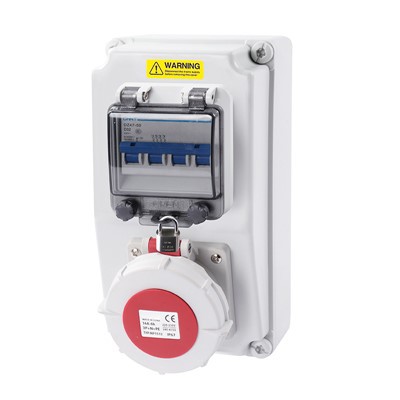

Hey there! As a supplier of Home Electrical Distribution Box, I often get asked about the difference between single-pole and double-pole circuit breakers in a home electrical distribution box. So, I thought I'd write this blog to clear things up.
Let's start with the basics. A circuit breaker is a safety device that automatically shuts off the electrical circuit when it detects an overload or a short circuit. This helps prevent electrical fires and other hazards. In a home electrical distribution box, you'll find both single-pole and double-pole circuit breakers, each with its own specific purpose.
Single-Pole Circuit Breakers
Single-pole circuit breakers are the most common type of circuit breaker used in homes. They're designed to protect a single circuit, typically a 120-volt circuit. These circuits are used for things like lighting, outlets, and small appliances.
The main characteristic of a single-pole circuit breaker is that it only controls one hot wire. It has a single switch that, when flipped, cuts off the power to the circuit. Single-pole breakers are usually rated for 15 or 20 amps, which is enough to handle the electrical load of most household circuits.
For example, if you have a room with a few lights and some outlets, a single-pole circuit breaker would be sufficient to protect that circuit. When you turn on the lights or plug in an appliance, the current flows through the hot wire and back through the neutral wire. If the current exceeds the breaker's rating, the breaker will trip, cutting off the power to the circuit.
Double-Pole Circuit Breakers
Double-pole circuit breakers, on the other hand, are used to protect 240-volt circuits. These circuits are typically used for larger appliances like electric ranges, dryers, and air conditioners.
The key difference between a single-pole and a double-pole circuit breaker is that a double-pole breaker controls two hot wires. It has a single switch that, when flipped, cuts off the power to both hot wires simultaneously. This is important because 240-volt circuits require two hot wires to function properly.
Double-pole breakers are usually rated for 30, 40, or 50 amps, depending on the electrical load of the appliance. For example, an electric range might require a 50-amp double-pole breaker, while a dryer might require a 30-amp double-pole breaker.
Key Differences
Now that we've covered the basics, let's take a closer look at the key differences between single-pole and double-pole circuit breakers:
- Voltage: Single-pole breakers are used for 120-volt circuits, while double-pole breakers are used for 240-volt circuits.
- Number of Hot Wires: Single-pole breakers control one hot wire, while double-pole breakers control two hot wires.
- Amp Rating: Single-pole breakers are typically rated for 15 or 20 amps, while double-pole breakers are rated for 30, 40, or 50 amps.
- Physical Size: Double-pole breakers are usually larger than single-pole breakers because they need to accommodate two hot wires.
Why It Matters
Understanding the difference between single-pole and double-pole circuit breakers is important for several reasons. First, it helps ensure that your home's electrical system is safe and functioning properly. Using the wrong type of breaker can lead to electrical problems, such as overheating, short circuits, and even electrical fires.
Second, it can help you troubleshoot electrical issues. If you have a circuit that keeps tripping, knowing whether it's a single-pole or double-pole circuit can help you determine the cause of the problem. For example, if a single-pole breaker keeps tripping, it could be due to an overload or a short circuit in the circuit. If a double-pole breaker keeps tripping, it could be due to a problem with the appliance or the wiring.
Choosing the Right Circuit Breaker
When it comes to choosing the right circuit breaker for your home, there are a few things to keep in mind. First, you need to determine the voltage and amp rating of the circuit. This will help you choose the appropriate type of breaker.
Second, you need to consider the electrical load of the circuit. If you're using a high-power appliance, such as an electric range or a dryer, you'll need a double-pole breaker with a higher amp rating.
Finally, you need to make sure that the breaker is compatible with your electrical distribution box. Different manufacturers have different specifications, so it's important to choose a breaker that is designed to work with your specific box.
Conclusion
In conclusion, single-pole and double-pole circuit breakers play an important role in protecting your home's electrical system. By understanding the difference between the two, you can ensure that your home is safe and your electrical appliances are functioning properly.

If you're in the market for a home electrical distribution box or need help choosing the right circuit breakers, we're here to help. As a leading supplier of Home Electrical Distribution Box, we have a wide range of products to meet your needs. Contact us today to learn more about our products and how we can help you with your electrical distribution needs.
References
- Electrical Safety Foundation International. (n.d.). Circuit Breakers. Retrieved from https://www.esfi.org/safety-topics/circuit-breakers
- National Fire Protection Association. (2020). National Electrical Code (NEC). Retrieved from https://www.nfpa.org/codes-and-standards/all-codes-and-standards/list-of-codes-and-standards/detail?code=70