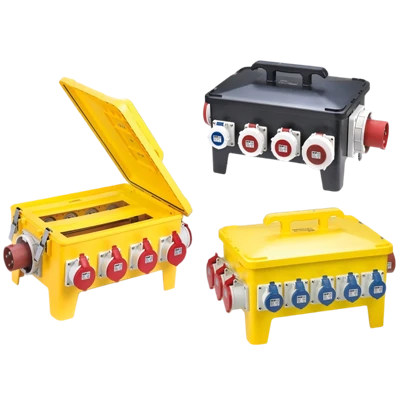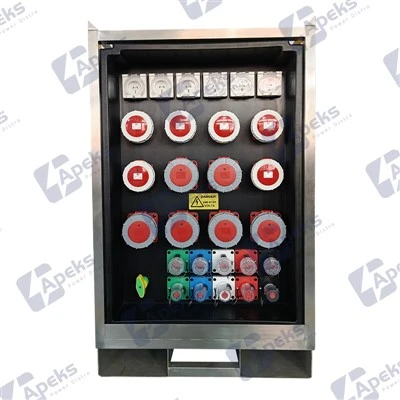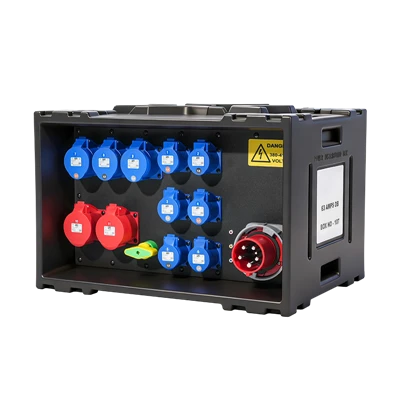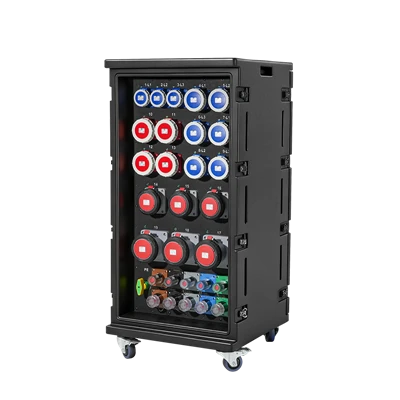
Temporary electrical systems used for concerts, exhibitions, outdoor activities, and construction projects require strict safety management because power equipment is often installed in changing environments with multiple connected devices.
A temporary power distribution box is not only responsible for distributing electricity to different equipment groups but also plays an important role in protecting people and electrical devices. Two key protection components inside the system are the RCD (Residual Current Device) and MCB (Miniature Circuit Breaker).
These two devices work together to detect abnormal electrical conditions, disconnect dangerous circuits, and reduce the risks caused by electric leakage, overload, and short circuits. APEKS ELECTRIC CO., Ltd. develops temporary power distribution solutions with protection configurations designed according to application requirements.
The Dual Layers of Event Electrical Security
Unlike permanent assets, temporary setups undergo constant relocation. Built-in mechanisms handle distinct, vital safety metrics:
RCD (Residual Current Device): Constantly tracks current equilibrium. It flags minor operational deviations when electricity escapes standard channels due to compromised insulation or moisture exposure, instantly shutting down circuits to mitigate lethal shock hazards.
MCB (Miniature Circuit Breaker): Governs strict infrastructure thresholds. When overloads or sudden low-resistance short circuits trigger catastrophic surges, it strips line power instantly to shield heavy logistics, downstream components, and cabling grids from fire or terminal melt.

Safety Pressures in Temporary Performance Applications
Live stages, exhibit halls, and production venues rely extensively on complex cable networks that operate under unpredictable conditions.
Cable Damage & Strain
Heavy pedestrian flow and transport equipment compress trunk lines over long runs. Wear down reveals live conductors, immediately prompting the RCD to break sub-circuits before injuries manifest.
Environmental Humidity
Rain, ground saturation, and atmospheric condensation heavily degrade insulation thresholds. RCD tracking forms an essential fail-safe boundary when setups step beyond dry indoor properties.
Multi-Device Overloading
Catering grids, pro-audio arrays, and massive lighting arrays pull intense concurrent currents. If load distribution fails balance rules, integrated MCBs trip specific rails safely to protect internal busbars.
Functional Matrix: Coordinated Isolation
Because hazard types present independent traits, a resilient box pairs both architectures into a cohesive panel framework:
| Device Type | Primary Core Function | Critical Threat Protected Against |
|---|---|---|
| RCD Protection | Residual/leakage current imbalance tracking | Human electric shock risk & physical insulation breakdown |
| MCB Protection | Overcurrent and thermal circuit cap limits | System overloading hazards and direct line short circuits |
Critical Engineering Selection Requirements
Proper Amperage Rating
Component ratings must strictly map down to anticipated branch demands. Selecting under-sized metrics will loop endless nuisance trips midway through shows, whereas over-speccing the limits dulls device sensitivity, minimizing overall protection depth.
Strategic Circuit Segregation
Isolating sensitive audio equipment, heavy catering links, and special stage lighting loops across individual sub-breakers maximizes uptime. If an active fault strikes a cooking element, only that local line breaks, keeping main stage performance power unaffected.
Common Mistakes in Temporary Power Distribution
Improper setup protocols often weaken structural safety. Avoid these typical field mistakes:
• Relying Exclusively on Circuit Breakers: Utilizing standard overcurrent breakers without grounding RCD units completely misses current leaks, omitting critical human protection loops.
• Overloading Single Terminal Outputs: Aggregating multiple utility pieces onto single sub-circuits without tracking compound amperage forces recurring shutdowns.
• Skipping On-Site System Diagnostics: Omitting complete diagnostic test procedures, mechanical checking, and cable testing prior to opening live event grounds blocks real protection tracking.
FAQ
What is the difference between RCD and MCB?
RCD detects leakage current and helps reduce electric shock risks, while MCB protects circuits from overload and short circuits.
Can an MCB replace an RCD?
No. An MCB cannot detect leakage current, so it cannot provide the same protection function as an RCD.
Why are RCDs important for outdoor events?
Outdoor environments may involve moisture, damaged cables, and changing conditions, increasing the possibility of leakage current.
Do all temporary power distribution boxes include RCD and MCB protection?
The configuration depends on the application requirements and electrical standards. Many event power systems include both devices for comprehensive protection.
How APEKS ELECTRIC CO., Ltd. Applies Protection Design
APEKS ELECTRIC CO., Ltd. integrates high-grade safety devices directly into temporary power equipment. By matching circuit parameters, loading distribution layout, specific enclosure protection, and safety needs, our custom systems optimize reliability across public installations.