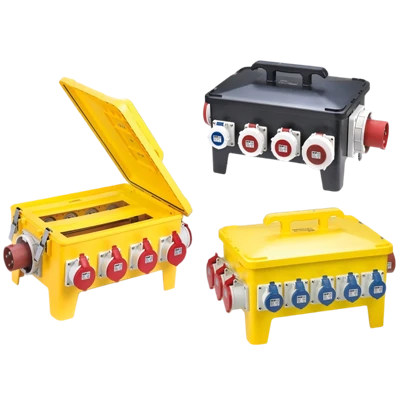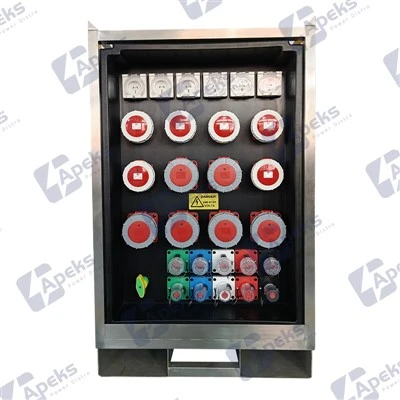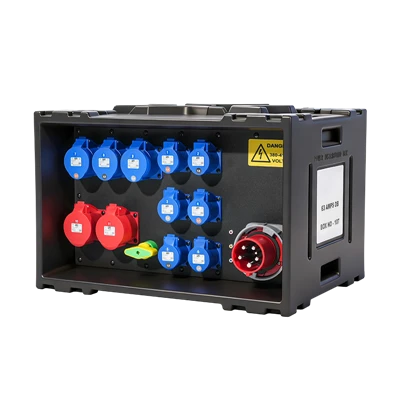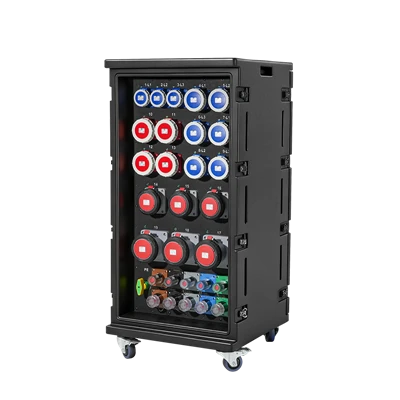
For electrical contractors, event equipment suppliers, and industrial buyers, choosing the right model requires more than checking the number of sockets. The distribution box must match the available power supply, connected equipment, installation environment, and applicable electrical requirements. Understanding these factors before ordering can help buyers avoid connection incompatibility, insufficient capacity, and unnecessary changes during installation.
Identify the Application and Operating Conditions
Start by identifying where the distribution box will be used and which equipment it needs to supply. A unit intended for an indoor workshop may have different enclosure and connection requirements from one used at an outdoor event or construction site.
Common applications include:
Events and stage installations: Supplying compatible lighting equipment, audio systems, control devices, and auxiliary equipment.
Construction sites: Providing temporary power connections for portable tools and designated work areas.
Workshops and maintenance areas: Distributing power to service tools, testing equipment, and small electrical devices.
Exhibitions and temporary facilities: Supporting temporary installations where equipment needs to be connected and disconnected regularly.
Commercial and industrial locations: Providing a local distribution point for equipment with compatible electrical requirements.
Buyers should prepare a list of the equipment to be connected, including each device's rated voltage, current, plug type, and expected operating pattern. Motors and other equipment with high starting currents require particular attention.
The installation environment is equally important. Consider whether the distribution box will be exposed to rain, dust, impact, frequent movement, or prolonged operation. These conditions influence the enclosure, connectors, mounting arrangement, and protection requirements.
Check the Input Voltage, Phase, and Current Rating
The input specification determines whether the distribution box can connect correctly to the available electrical supply. A 16A rating does not automatically indicate that two products are interchangeable, because their voltage, phase arrangement, and connector standards may differ.
| Specification | What Buyers Should Check |
|---|---|
| Rated current | Confirm that the input connection and internal components are suitable for the intended supply. |
| Rated voltage | Match the distribution box to the available supply and connected equipment. |
| Phase arrangement | Determine whether the application requires single-phase or three-phase distribution. |
| Input connector | Check the plug or connector type, pin configuration, and current rating. |
| Supply frequency | Confirm compatibility with the electrical supply and connected devices. |
A single-phase distribution box should not be substituted for a three-phase model solely because both are marked 16A. The wiring arrangement and available outputs must suit the equipment being supplied.
Buyers should also distinguish between the input rating and the rating of individual output sockets. Multiple sockets do not mean that every outlet can draw the full input current simultaneously. The total load must remain within the limits of the complete distribution assembly, including its wiring, connectors, and protective devices.
Select the Right Number and Type of Output Sockets
The output configuration determines how equipment connects to the distribution box. Selecting the right arrangement can reduce the need for additional adapters, extension leads, or separate distribution equipment.
Consider these factors before choosing a model:
Socket quantity: Count the devices that need to operate at the same time and allow for reasonable future requirements.
Socket current rating: Ensure each outlet is appropriate for the equipment connected to it.
Connector standard: Match the sockets to the plugs used by the target market and application.
Output type: Determine whether single-phase or three-phase outputs are required.
Socket spacing: Check whether larger plugs or cable connectors could block adjacent outlets.
Circuit arrangement: Confirm how outlets are divided among protective devices and circuits.
For example, a workshop may need several outlets for portable tools and test instruments, while a stage installation may require different connections for lighting, audio, and auxiliary systems. The suitable configuration depends on the actual equipment list rather than the number of outlets alone.
For project and bulk orders, buyers should also confirm whether the outlet layout is fixed or customizable. Consistent configurations across multiple units can make equipment allocation, maintenance, and replacement easier.
Choose an Appropriate IP Rating and Enclosure Material
The enclosure protects internal electrical components from solid objects, water, and accidental contact according to its design and specified protection level. Buyers should select an appropriate rating based on the actual installation environment.
An IP rating indicates the degree of protection provided by an enclosure against the ingress of solids and water under specified test conditions.
Controlled indoor environments: The required rating depends on exposure to dust, moisture, and the conditions specified for the installation.
Outdoor installations: Consider protection against rain and water exposure, while following the manufacturer's stated operating limitations.
Construction and event sites: Assess dust, splashing water, cable handling, and the possibility of impact before selecting the enclosure.
IP44 and IP65 are two examples of enclosure ratings. IP44 protects against solid objects of 1 mm and larger and water splashing from any direction. IP65 provides dust-tight protection and protection against water jets under the applicable test conditions.
Neither rating means that the enclosure can be submerged in water. Buyers should also verify whether the rating applies to the complete assembled unit, including the sockets, cable entries, covers, and installed components.
Consider Portability and Cable Management
A 16A distribution box may be moved between work areas or positioned at a designated power distribution point. Its physical design should match how it will be transported, installed, connected, and maintained.
For portable applications, check the complete unit's weight, carrying handles, base stability, and protection of exposed connectors. The enclosure should be practical to move without placing unnecessary strain on the cables or connections.
For fixed or semi-permanent installations, mounting arrangements and cable routing may be more important. Confirm that the unit can be installed securely and that operators can access the protective devices for inspection and operation.
Cable management also affects daily use. Clearly arranged and labelled outlets help operators identify circuits, trace connections, and disconnect equipment without disturbing unrelated loads.
Before placing an order, confirm the following details:
- Overall dimensions and complete unit weight.
- Carrying handles or mounting arrangements.
- Cable entry positions and connector orientation.
- Access to switches and protective devices.
- Outlet and circuit labelling requirements.
These details are particularly relevant when purchasing multiple units for an event rental fleet, contractor equipment inventory, or standardized project installation.
Confirm Whether a 16A Distribution Box Can Handle the Required Load
The current rating must be considered alongside the connected equipment and expected operating conditions. Buyers should calculate the anticipated demand using the equipment nameplates and electrical design, then verify that the proposed distribution box can support the intended use.
Important considerations include:
Total simultaneous demand: Assess which devices will operate at the same time. Do not assume that the load will remain low simply because the box has several separate outlets.
Starting current: Motors, compressors, and certain other devices may draw significantly more current during startup than during normal operation. This can affect circuit selection and protection coordination.
Continuous operation: Equipment running for extended periods requires attention to current limits, cable ratings, ventilation, and operating conditions.
Load distribution: Where several circuits or phases are available, loads should be allocated according to the design and ratings of the distribution system.
Future requirements: If the project is likely to add equipment, confirm whether the existing supply and distribution arrangement can accommodate the additional demand.
If the expected load exceeds the permitted capacity, a higher-capacity distribution arrangement may be necessary. Buyers should not increase protective-device ratings without confirming that the wiring, connectors, and other components are suitable for the revised design.
Why Choose APEKS ELECTRIC for 16A Distribution Box Requirements?
APEKS ELECTRIC CO., Ltd. supplies power distribution equipment for event power, construction sites, and industrial applications. Its product range includes event distribution boxes, portable distribution boxes, stage power distribution panels, and construction distribution equipment.
For buyers sourcing a 16A distribution box, the most useful starting point is to provide a clear technical specification and intended application. This allows the required electrical configuration and enclosure design to be reviewed before production or ordering.
Application-based configuration: Provide the installation environment, connected loads, supply characteristics, and required output connections.
Connector and enclosure options: Confirm the socket standard, enclosure material, and required IP rating for the destination market and operating conditions.
Customized layouts: Discuss outlet arrangements and protective-device requirements when a standard configuration does not match the project.
Bulk-order coordination: Share order quantities, delivery expectations, labelling needs, and relevant drawings when requesting a quotation.
APEKS ELECTRIC's published product information includes industrial connector options, different enclosure protection levels, and customized internal layouts. Buyers should confirm the availability and full specifications of the required 16A configuration directly with the manufacturer.
When requesting a quotation, procurement teams should provide the input voltage and phase, required current rating, outlet types and quantities, protective-device requirements, enclosure rating, installation environment, and expected order quantity. A complete specification makes it easier to evaluate product suitability and reduce configuration discrepancies before an order is confirmed.