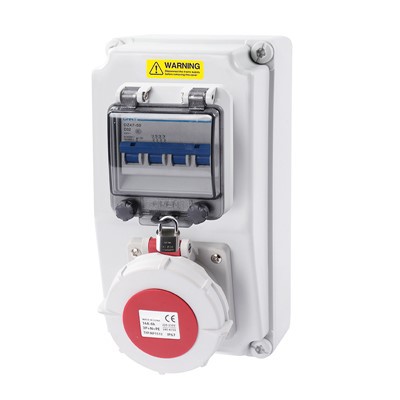

In industrial and commercial electrical systems, one of the most common questions is whether a custom distribution box with a specific circuit breaker can be designed to meet project requirements. From an engineering perspective, the answer is yes-but the implementation depends on electrical parameters, installation conditions, and compliance standards.
This article explains how custom power distribution boxes are designed with specified circuit breakers, including technical considerations, typical configurations, and real-world applications.
1. Why Customize a Distribution Box with a Specific Circuit Breaker?
In most projects, standard distribution boxes cannot fully meet application requirements. Engineers often need to specify circuit breakers based on:
Rated current (e.g., 32A, 63A, 125A, 400A, 630A)
Breaking capacity (e.g., 10kA, 25kA, 36kA, 50kA)
Load type (motor loads, lighting, sensitive equipment)
Protection type (MCB, MCCB, RCBO, ACB)
For example:
Motor circuits typically require Type C or Type D MCBs
Socket circuits often require RCBO (30mA leakage protection)
Main incomers use MCCB or ACB for high current applications
This is why custom electrical distribution panels are widely used instead of off-the-shelf solutions.
Module title
请替换当前内容 Lorem ipsum dolor sit amet consectetur adipisicing elit. Ipsa odio, enim deserunt magni laborum expedita? Optio officiis culpa amet, dolorem laudantium possimus quae dolore! Atque iure expedita numquam assumenda dolorum
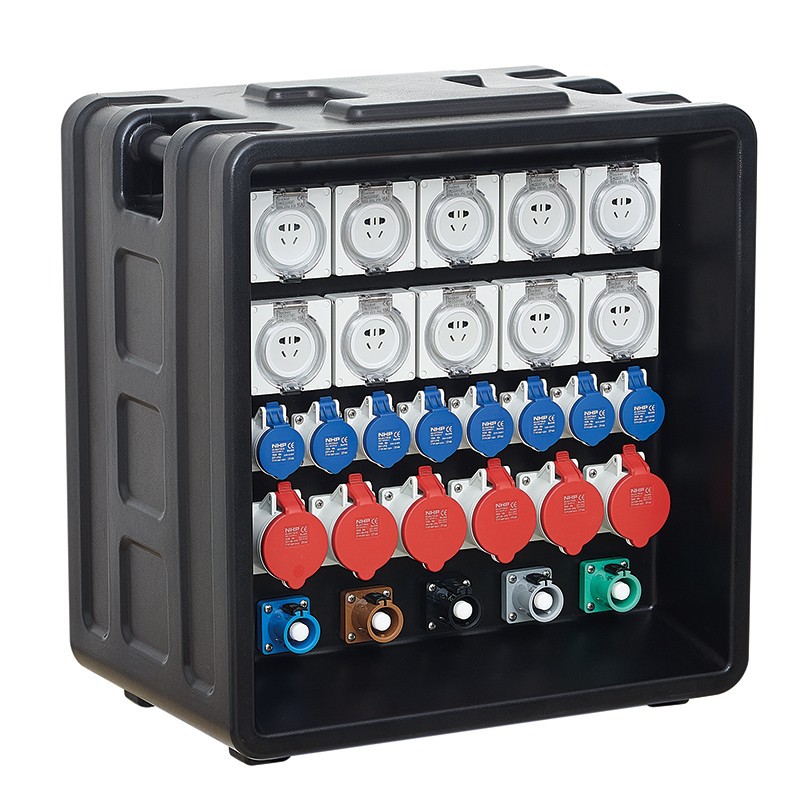
2. Compatible Circuit Breaker Types in Custom Distribution Boxes
A properly designed custom distribution box can integrate different types of circuit breakers, including:
Miniature Circuit Breakers (MCB)
Current range: 6A – 125A
Application: lighting, small equipment
Mounting: DIN rail
Molded Case Circuit Breakers (MCCB)
Current range: 100A – 1600A
Breaking capacity: up to 50kA or higher
Application: main distribution, industrial loads
Residual Current Devices (RCD / RCBO)
Leakage protection: 30mA / 100mA / 300mA
Application: personnel and fire protection
Air Circuit Breakers (ACB)
Current range: 630A – 6300A
Application: main switchboards, high-power systems
3. Support for Specified Brands and Standards
In many international projects, customers require specific brands for consistency and maintenance. A custom power distribution unit (PDU) can be designed to accommodate breakers from:
Schneider Electric
ABB
Siemens
Design considerations include:
Mounting dimensions and fixing method
Busbar connection compatibility
Terminal layout and cable entry direction
Maintenance accessibility
4. Engineering Design Considerations
4.1 Enclosure Size and Layout
The enclosure must be sized based on:
Number of circuits
Breaker dimensions
Cable routing space
Heat dissipation
Typical sizes:
Small panel: 500 × 400 × 200 mm (up to 12 circuits)
Medium panel: 800 × 600 × 250 mm (24–48 circuits)
Large floor-standing panel: 2000 × 800 × 600 mm
4.2 Busbar and Current Design
For high-current distribution boxes:
250A → copper busbar ~25×5 mm
400A → ~30×5 mm
630A → ~40×5 mm
Phase spacing (400V system):
≥20–30 mm
4.3 Thermal Management
When integrating high-current breakers:
Internal temperature rise must be controlled (<35°C above ambient)
Adequate spacing between devices is required
Ventilation or forced cooling may be necessary
4.4 Protection Coordination
Proper breaker selection ensures:
Selectivity (only the faulty circuit trips)
Avoidance of nuisance tripping
System stability under fault conditions
5. Application Example: Custom Industrial Distribution Box
Project Type: Manufacturing Workshop
System Parameters:
Incoming: 400A, 3-phase, 400V
Short-circuit level: 36kA
Configuration:
Main breaker: 400A MCCB
Outgoing circuits:
6 × 63A (machinery)
12 × 32A (power outlets)
8 × 16A (lighting)
Enclosure:
Size: 800 × 600 × 250 mm
Mounting: wall-mounted
IP rating: IP54
This configuration ensures safe and efficient power distribution while allowing future expansion.
6. Compliance with International Standards
All custom distribution boxes should comply with:
International Electrotechnical Commission IEC 61439 (low-voltage switchgear assemblies)
International Electrotechnical Commission IEC 60529 (IP protection rating)
National Electrical Manufacturers Association NEMA enclosure standards
These standards ensure:
Electrical safety
Mechanical strength
Thermal performance
Environmental protection
7. Key Advantages of Custom Distribution Boxes
Exact match to project requirements
Compatibility with specified breaker brands
Improved safety and protection coordination
Optimized space and cable management
Easier maintenance and future upgrades
Conclusion
A custom distribution box with a specific circuit breaker is not only feasible but essential for most industrial and commercial projects. The key lies in proper engineering design, including breaker selection, enclosure layout, thermal management, and compliance with standards.
Instead of adapting your system to a standard panel, a customized solution ensures long-term reliability, safety, and scalability.
🔧 Need a Custom Distribution Box?
If you have a project requiring:
Specific breaker brands (ABB / Schneider / Siemens)
High current systems (32A–630A+)
Industrial or event power distribution
You can define your requirements based on:
Current rating
Number of circuits
Installation environment
Protection level
A properly engineered custom solution will significantly improve system performance and reliability.